

Blog
Money in Georgia: The Complete Guide to Currency & Cards

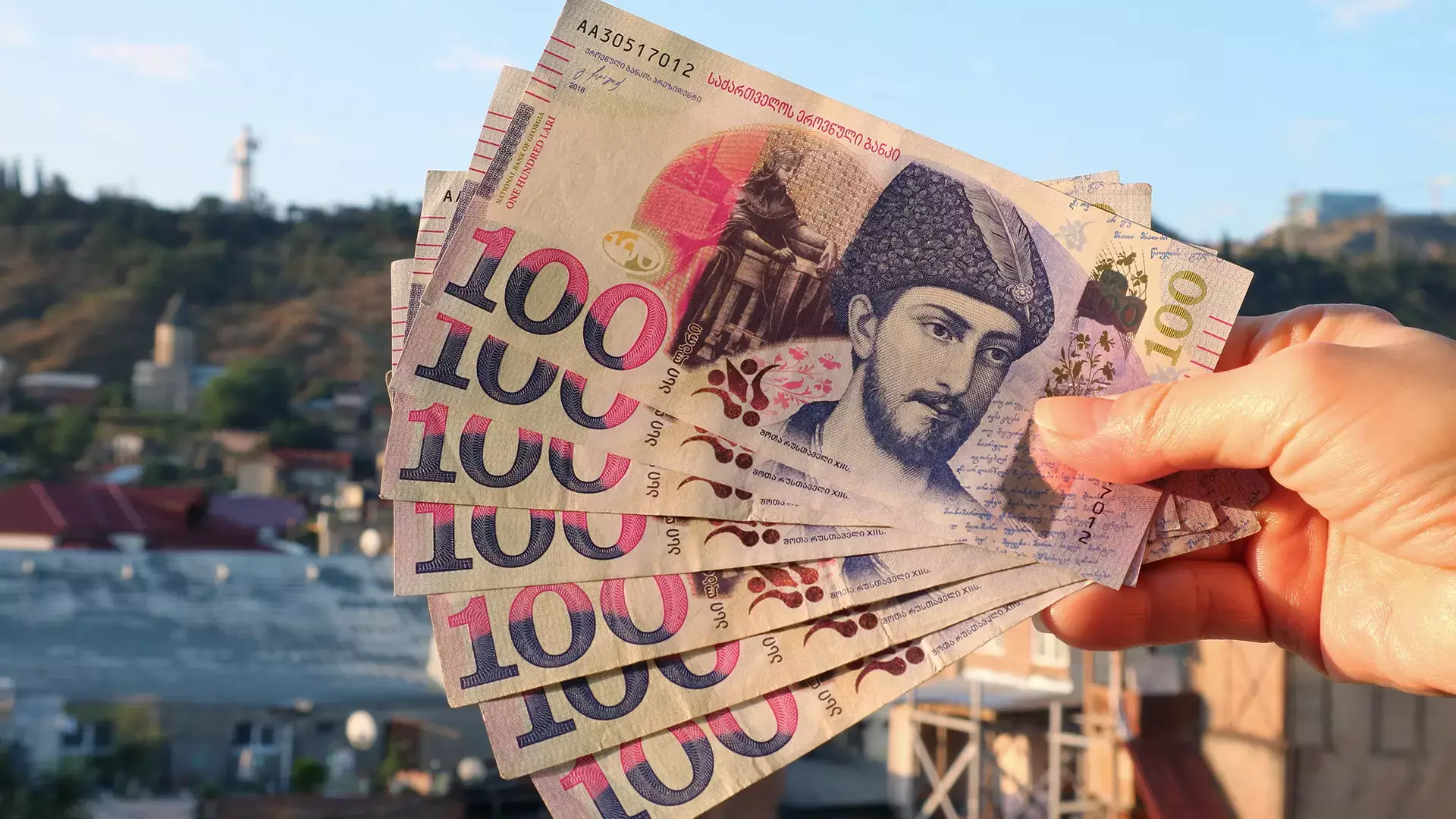
Money in Georgia works differently depending on where you are — cards work brilliantly in Tbilisi's restaurants and supermarkets, but are often useless on a mountain road to Kazbegi or in a small Svaneti guesthouse. This guide covers everything about money in Georgia: exactly where cash is required, where cards work, current exchange rates, and how much to tip.
Prefer not to worry about cash on the road?
Our private tours are priced per group with fuel, parking, 4x4 and tastings included — one price, agreed in advance.
💵 Georgian Lari (₾/GEL)
💳 Cards work in cities
🏔️ Cash essential in mountains
Understanding Money in Georgia — The Lari
Money in Georgia means the Georgian Lari, abbreviated GEL and written with the symbol ₾. It has been Georgia's sole legal currency since 1995, divided into 100 Tetri. Banknotes come in 5, 10, 20, 50, 100 and 200 Lari denominations, plus 1 and 2 Lari coins. The 200₾ note is uncommon in everyday circulation — many small shops and taxi drivers won't have change for it, so it's worth sticking to 50₾ notes and below for daily spending.
As of 2026, exchange rates for money in Georgia are approximately 1 USD ≈ 2.70 GEL, 1 EUR ≈ 3.0 GEL, and 1 GBP ≈ 3.3 GEL — though rates fluctuate, so it's worth checking a live rate shortly before your trip rather than relying on a fixed number. The National Bank of Georgia publishes official daily rates if you want to check before you travel.
Where Cards Work — and Where Money in Georgia Means Cash Only
Visa and Mastercard are widely accepted throughout Tbilisi and Batumi — hotels, restaurants, supermarkets, and most shops in tourist areas take cards without issue, and contactless payments including Apple Pay and Google Pay work at most urban merchants. American Express is accepted far less consistently, so don't rely on it as your primary card.
The picture changes considerably once you leave the cities. Small village shops in Svaneti or Racha, individual taxi drivers not using Bolt or Yandex Go, marshrutka minibuses, family-run wineries in Kakheti (on our Kakheti wine tour the tasting is already included), church donations, and mountain guesthouses generally operate on cash only. If you're booking a ride through Bolt or Yandex Go's app directly, in-app card payment removes this issue entirely for that specific ride — but step outside those ecosystems and cash remains the default for money in Georgia.
ATMs — Where to Find Them, Where You Won't
ATMs are abundant in Georgian cities, with TBC Bank operating the largest network, followed by Bank of Georgia, and Liberty Bank maintaining a strong presence in smaller towns and post offices. Most Georgian bank ATMs charge a fee for foreign card withdrawals — in 2026, expect a flat fee of roughly 4-8 GEL, or 1.5-3% of the withdrawal amount, whichever is higher.
Mountain regions require more planning for money in Georgia. Stepantsminda (Kazbegi) has at least one ATM, but it can run dry during busy summer weekends. Mestia in Svaneti has limited ATM access. Tusheti, remote Svaneti villages beyond Mestia, and the Khevi region have no ATMs at all — withdraw everything you'll need before leaving the last major town.
Should You Withdraw USD or EUR Instead of GEL?
It's technically possible to withdraw foreign currency at some Georgian ATMs — look for a Dollar or Euro sign on the machine — but this has become less common as the government's "Larization" policy encourages Lari use for money in Georgia. Withdrawing EUR directly is particularly limited and costly. In most cases, you're better off withdrawing Georgian Lari and exchanging any leftover amount before departure, rather than paying the premium for direct foreign currency withdrawal.
Avoiding Common Mistakes with Money in Georgia
- Dynamic Currency Conversion: When paying by card or withdrawing cash, machines often ask whether to charge you in GEL or your home currency. Always choose GEL — accepting the "convenient" home currency option typically costs 3-5% more.
- Airport currency exchange: Exchange only a small amount for your taxi or initial expenses at the airport. City-centre exchange booths and ATMs typically offer rates 2-3% better than airport counters. If you pre-book a Tbilisi airport transfer at a fixed price, you don't need any cash for the ride into the city at all.
- Assuming cards work everywhere: As covered above, rural Georgia — wineries, guesthouses, small shops — runs largely on cash.
Customs Declaration Rules for Money in Georgia
If you're carrying more than 30,000 GEL (roughly $11,100 USD) in cash or monetary instruments, Georgian customs requires a declaration on arrival, per Georgia's Revenue Service. Most travelers never approach this limit, but failure to declare amounts above it can result in confiscation and fines.
Tipping — The Unwritten Rule of Money in Georgia
Tipping in Georgia is appreciated but rarely mandatory, and the expected amount varies by context:
- Multi-day guided tours (Svaneti, Tusheti, Kazbegi): guides typically receive 50-100 GEL per traveler at the end of the trip; drivers a similar or slightly lower amount.
- Cooking classes and wine tastings: 10-20 GEL per person to the host is generous and welcome.
- Free walking tours: pay what the tour was worth to you — 20-40 GEL per person is the typical range in Tbilisi.
- Hotel housekeeping: 5-10 GEL per day, or 20-50 GEL left at the end of your stay.
- Guesthouses: no tip is expected from the family hosting you — a small gift is often valued more than money.
- If invited to a supra (the traditional Georgian feast): don't attempt to tip your hosts.
Don't Forget — Mandatory Travel Insurance
Separately from money in Georgia, all visitors have been required to hold valid travel insurance with a minimum coverage of 30,000 GEL since January 2026. See our Georgia Travel Insurance Requirement guide for full details on what's required.
Planning a Mountain Trip? Plan Your Cash Accordingly
If your itinerary includes Kazbegi, Svaneti, or other mountain regions, withdraw sufficient Lari in Tbilisi before departing — our Kazbegi & Gudauri Day Tour and Kazbegi Horseback Riding Tour both venture well outside reliable ATM coverage. If you're renting a car and exploring independently, the same rule applies even more — see our Car Rental page for details on self-drive planning.
Frequently Asked Questions About Money in Georgia
What currency should I bring to Georgia?
Bring USD or EUR in cash to exchange, or simply withdraw Georgian Lari from an ATM after arrival — both are common, reliable approaches to money in Georgia. Travelling from India or the Gulf? Our Georgia tour packages from India and Georgia tour packages from Dubai are quoted in INR and AED, so you know the full cost in your own currency before you fly.
Can I pay in USD or EUR directly in Georgia?
No, everyday purchases must be paid in Georgian Lari — shops, restaurants and transport do not accept foreign currency directly.
Are there ATMs in Kazbegi and Svaneti?
Kazbegi (Stepantsminda) has at least one ATM, though it can run out of cash on busy weekends. Mestia has limited ATM access, and more remote Svaneti villages have none at all — withdraw cash before you go.
How much should I tip in Georgia?
Tipping is appreciated but not mandatory. Guided tours typically warrant 50-100 GEL per traveler, while guesthouse hosts generally expect no tip at all.
Planning your trip and want a stress-free experience with money in Georgia handled from day one? Message us on WhatsApp — we're happy to help with anything from itinerary planning to practical questions like this one.