
Blog
Kukushka Train Georgia: The Complete Borjomi–Bakuriani Railway Guide

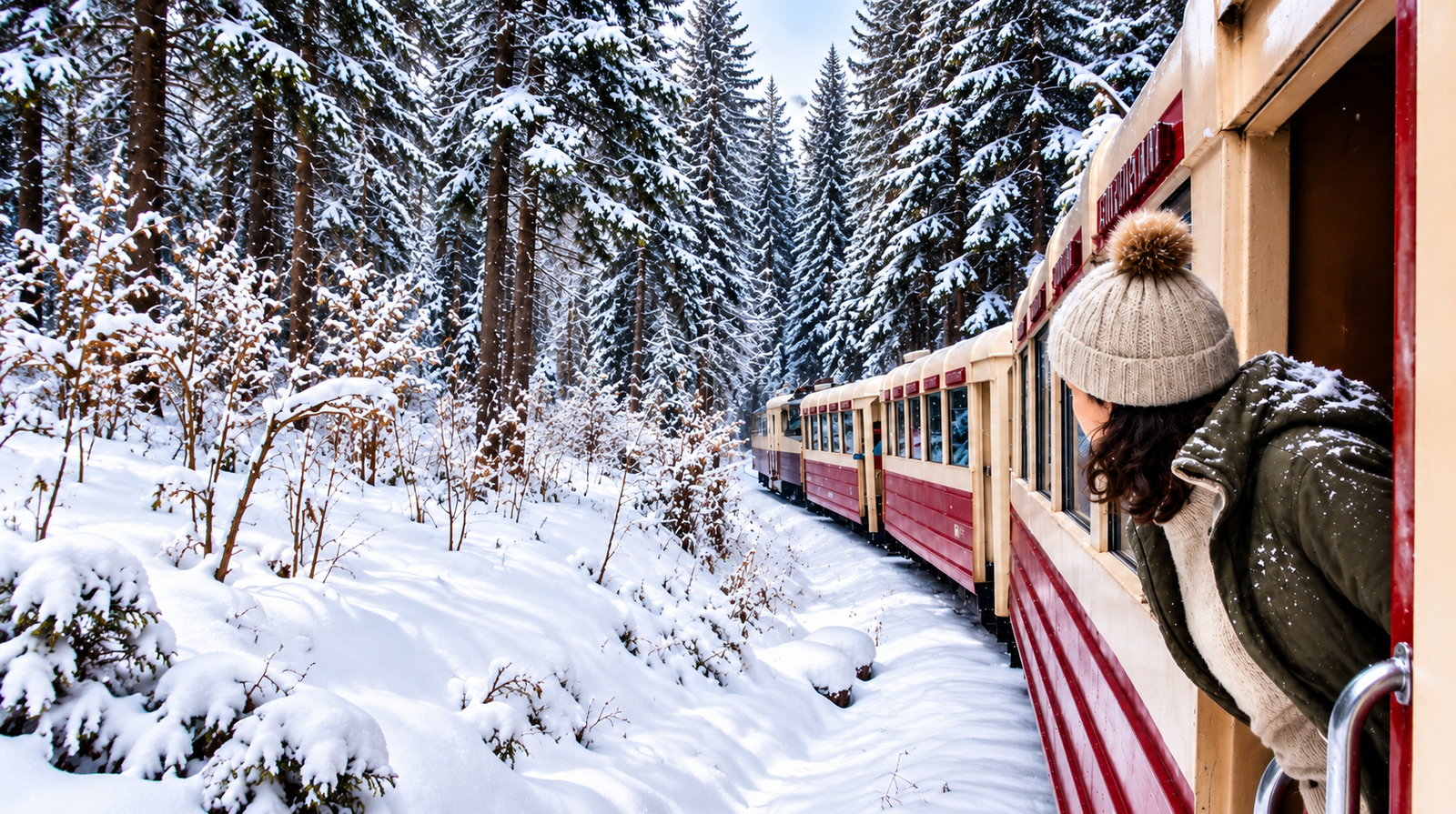
The Kukushka train is one of the most loved experiences in Georgia — a tiny, slow mountain train that has climbed from the spa town of Borjomi to the ski resort of Bakuriani since 1902. After six years of silence, it is about to run again. This guide covers everything you need to know: the 2026 reopening, the history and the famous Eiffel Bridge, how the ride works, how to get there from Tbilisi, and the best things to do in Borjomi and Bakuriani before and after your journey.
🚂 37 km of narrow-gauge track
⛰️ 820 m → 1,700 m
🕐 About 2.5 hours
📅 Running since 1902
Quick Answer: Is the Kukushka Train Running Again?
Not yet — but very soon. The Kukushka stopped running in 2020. On 9 October 2026, Georgia's Deputy Prime Minister and Minister of Economy, Mariam Kvrivishvili, announced that the rehabilitation of the line is nearly complete and that the train is expected to resume operations in December 2026, with new carriages designed to match Bakuriani's landscape and the railway's historic character. The exact opening date and new timetable have not been published yet — we will update this guide as soon as they are.
Want to ride the Kukushka without the logistics?
Private day trip from Tbilisi · Borjomi Park · Kukushka · Bakuriani · $280 for 1–3
What Is the Kukushka Train?
The Borjomi–Bakuriani railway is a narrow-gauge mountain line (900 mm) in the Lesser Caucasus. Locals have always called its little train the Kukushka — "the little cuckoo" — after the cheerful sound of its whistle echoing through the forest. Construction began in 1897 under the Russian Empire, and the first train ran in January 1902, carrying holidaymakers from the Romanov family's favourite spa town up to the cool pine air of Bakuriani.
The line is only 37.2 km long, but it climbs almost 900 metres, from about 820 m in Borjomi to 1,700 m in Bakuriani. At an average speed of around 15 km/h, the journey takes about two and a half hours — and that slowness is exactly the point. You have time to watch the forest, the river valleys and the small villages of Tsaghveri, Tsemi, Libani and Sakochavi drift past your window.
The Eiffel Bridge: The Highlight of the Route
Between Tsaghveri and Tsemi, the train crosses a slender iron railway bridge over the Tskhenistskali (Tsemistskali) River. It was commissioned by Grand Duke Michael Nikolaevich of the Romanov family from Gustave Eiffel — the French engineer behind the Eiffel Tower — and built by Besarion Keburia. It opened together with the railway in 1902 and is still one of the most photographed spots on the line. Have your camera ready: the bridge comes quickly, and the view down to the river is worth it.
What the Ride Is Like
Before the 2020 pause, the Kukushka was a simple, old-fashioned experience: one or two small carriages, wooden benches, open windows in summer and a conductor who sold tickets on board for just a few lari. Two trains ran in each direction every day. The new carriages announced for the relaunch are expected to be more comfortable, but the route, the speed and the views stay the same.
Tips for the best experience:
- Sit on the side facing the valley for the best forest and river views — ask the conductor or your guide which side is better on the day.
- Ride uphill from Borjomi to Bakuriani. The climb is the most scenic direction, and it ends in a mountain resort rather than back in town.
- Bring a warm layer even in summer. Bakuriani is almost 900 m higher than Borjomi and noticeably cooler.
- Keep a little cash in Georgian lari for snacks or souvenirs — see our Money in Georgia guide.
Kukushka Train Schedule and Tickets
The new timetable and ticket prices have not been announced yet. For reference, before the line was paused, trains left Borjomi around 07:15 and 10:55 and returned from Bakuriani around 10:00 and 14:15, and a ticket cost only about 2 lari, paid on board. Expect the new schedule to be similar in rhythm — two departures a day — but always check before you travel.
One practical detail that confuses many travellers: the Kukushka does not leave from Borjomi's main "Borjomi Parki" station, but from its own small station a few kilometres away. If you travel independently, allow time for a short taxi ride. If you travel with us, your driver takes you straight to the platform.
How to Get to the Kukushka from Tbilisi
Borjomi is about 160 km west of Tbilisi — roughly 2.5 to 3 hours by car through the Mtkvari valley and the forested Borjomi Gorge. There are three main options:
| Option | Time to Borjomi | Good to know |
|---|---|---|
| Private tour | 2.5–3 hours | Hotel pickup, Kukushka station drop-off, driver waits in Bakuriani and drives you back the same day |
| Marshrutka (minibus) | About 3 hours | From Didube station in Tbilisi; cheap, but returning from Bakuriani the same day is difficult |
| Regional train | 4+ hours | Slow and scenic, arrives at Borjomi Parki station, not the Kukushka station |
The challenge with doing it independently is the return: the Kukushka takes you up to Bakuriani, but you still need to get back to Tbilisi — about 180 km and 3 hours by road. That is why most visitors combine the train with a private car. On our Borjomi & Bakuriani Kukushka train tour, your driver drops you at the Kukushka station, drives up while you ride the train, meets you at Bakuriani station and brings you back to your Tbilisi hotel in the evening.
Best Things to Do in Borjomi
Borjomi is a 19th-century spa town in a deep green gorge, famous across the former Soviet Union for its salty, naturally sparkling mineral water. It is worth a few hours before your train:
- Borjomi Central Park — the historic park along the Borjomula river, with the mineral water spring where you can taste Borjomi straight from the source. A small entrance fee applies (around 5 lari at the time of writing).
- The sulfur pools — warm open-air pools (around 30–32 °C) at the far end of the park, about a 30–45 minute walk through the forest. Best in the warmer months.
- The park cable car — a short ride up to the plateau above the park for views over the town.
- The Green Monastery — a small 9th-century monastery hidden in the forest near Likani, along the Chitakhevi river. Peaceful and very atmospheric.
- Likani and the Romanov Palace — the Romanovs' summer palace stands just outside Borjomi; it is currently closed for restoration, but the setting shows why the imperial family loved this valley.
- Borjomi-Kharagauli National Park — one of the largest protected areas in the Caucasus, with marked hiking trails starting near Likani, for those with more time.
Best Things to Do in Bakuriani
At the top of the Kukushka line, Bakuriani is Georgia's oldest ski resort and a relaxed pine-forest village that works in every season:
- Winter snow — gentle ski slopes across Didveli, Kokhta and Mitarbi, a beginner slope right in the village, plus sledging, snow tubing and horse-drawn sleigh rides. Perfect for families and first-time snow visitors.
- The Didveli gondola — the easiest way to reach the high slopes and mountain views without skis.
- Forest walks — in spring, summer and autumn, Bakuriani's meadows and pine forests are ideal for easy walks and picnics.
- Cosy food — warm Georgian dishes in wooden guesthouses and restaurants after a cold day outside.
Comparing Bakuriani with Georgia's other big resort? Our Gudauri vs Bakuriani guide explains which suits you better.
Best Time to Ride the Kukushka
- Winter (December–March): the most magical season — snow on the pines, frozen rivers and real winter waiting in Bakuriani (see our complete guide to Georgia in winter). Combine it with a festive break using our Christmas in Georgia guide.
- Spring (April–May): fresh green forests, rivers full of snowmelt and very few crowds.
- Summer (June–August): a cool escape from the Tbilisi heat, with open windows and mountain air.
- Autumn (September–November): the gorge turns gold and red — a photographer's dream.
See our Best Time to Visit Georgia guide for the full month-by-month picture.
Sample Day: Borjomi, the Kukushka and Bakuriani from Tbilisi
- Morning: pickup in Tbilisi and scenic drive to Borjomi.
- Late morning: walk through Borjomi Central Park and taste the mineral water at the spring.
- Midday: board the Kukushka and ride 2.5 hours up through the forest and over the Eiffel Bridge.
- Afternoon: free time in Bakuriani — snow, lunch or a forest walk.
- Evening: private drive back to Tbilisi.
This is exactly the route of our private Kukushka train tour from Tbilisi. Prefer history and castles? Our Borjomi & Rabati Fortress tour pairs Borjomi with Akhaltsikhe's fortress instead. For more ideas, see our guide to the best day tours from Tbilisi.
Frequently Asked Questions
When does the Kukushka train reopen?
Georgia's Ministry of Economy announced in October 2026 that the Borjomi–Bakuriani railway is expected to resume operations in December 2026. The exact date and timetable will be confirmed closer to the launch.
How long is the Kukushka train ride?
About 2.5 hours for 37 km, climbing from around 820 m in Borjomi to 1,700 m in Bakuriani.
Why is it called the Kukushka?
"Kukushka" means "little cuckoo" in Russian — a nickname inspired by the sound of the little train's whistle echoing through the forest.
Did Gustave Eiffel really design a bridge on the line?
Yes. The railway bridge near Tsaghveri was commissioned from Gustave Eiffel by Grand Duke Michael Nikolaevich and opened with the line in 1902.
Can I do Borjomi, the Kukushka and Bakuriani in one day from Tbilisi?
Yes, with a car. Public transport makes the return from Bakuriani difficult, so most visitors use a private driver who meets them at Bakuriani station — like our private Kukushka day tour.
Is the Kukushka good for children?
Yes — children love the little mountain train, the forest views and the snow in Bakuriani. It is one of the best family day trips in Georgia.
Which direction is best?
Borjomi to Bakuriani. Riding uphill gives you the best views and ends your journey in the mountains.
Rated 5.0 on Google by travellers from around the world.
Want to ride the Kukushka this winter?